
Understanding Zen and the Art of Motorcycle Maintenance

“Zen and the Art of Motorcycle Maintenance” is a 1974 novel by Robert M. Pirsig. It explores the metaphysical questions of quality and value through a cross-country motorcycle trip. Pirsig uses the journey to examine Western philosophy and Eastern thought, blending narrative and exposition. The book’s unique structure and themes sparked widespread debate and remains a classic of contemporary American literature.
Zen and the Art of Motorcycle Maintenance is a philosophical novel by Robert M. Pirsig that uses motorcycle maintenance as a metaphor for the pursuit of quality in life and the search for meaning.
Imagine trying to explain quantum physics by fixing a lawnmower engine, each bolt and carburetor adjustment reflects a deeper truth about the universe. That’s the core idea of Zen and the Art of Motorcycle Maintenance.
Key facts
- The novel was first published in 1974 and became a cult classic, blending memoir, philosophy, and technical manual into one.
- It follows a father-son road trip across the American Northwest, with motorcycle maintenance serving as a backdrop for existential discussions.
- The book introduces the concept of “Quality,” which Pirsig argues is a fundamental aspect of reality often overlooked by modern science and philosophy.
- The narrator, Phaedrus, is a fictionalized version of Pirsig himself, who underwent a mental breakdown and subsequent reinvention.
01What is the book’s central philosophy?
At its heart, the book contrasts two modes of thinking: Classical and Romantic. Classical thought is analytical, focusing on the mechanics and logic of things, like dissecting a motorcycle engine. Romantic thought, on the other hand, values subjective experience and emotion, like the feeling of freedom while riding. Pirsig argues that true understanding comes from balancing both modes, a synthesis he calls “Quality.”
The first time I really looked at Zen and the Art of Motorcycle Maintenance, I was struck by how Pirsig uses the act of fixing a motorcycle, something so tangible and mechanical, to explore abstract ideas like identity and the nature of reality. It’s a brilliant framework for discussing philosophy without getting lost in jargon.
02How does motorcycle maintenance illustrate Zen philosophy?
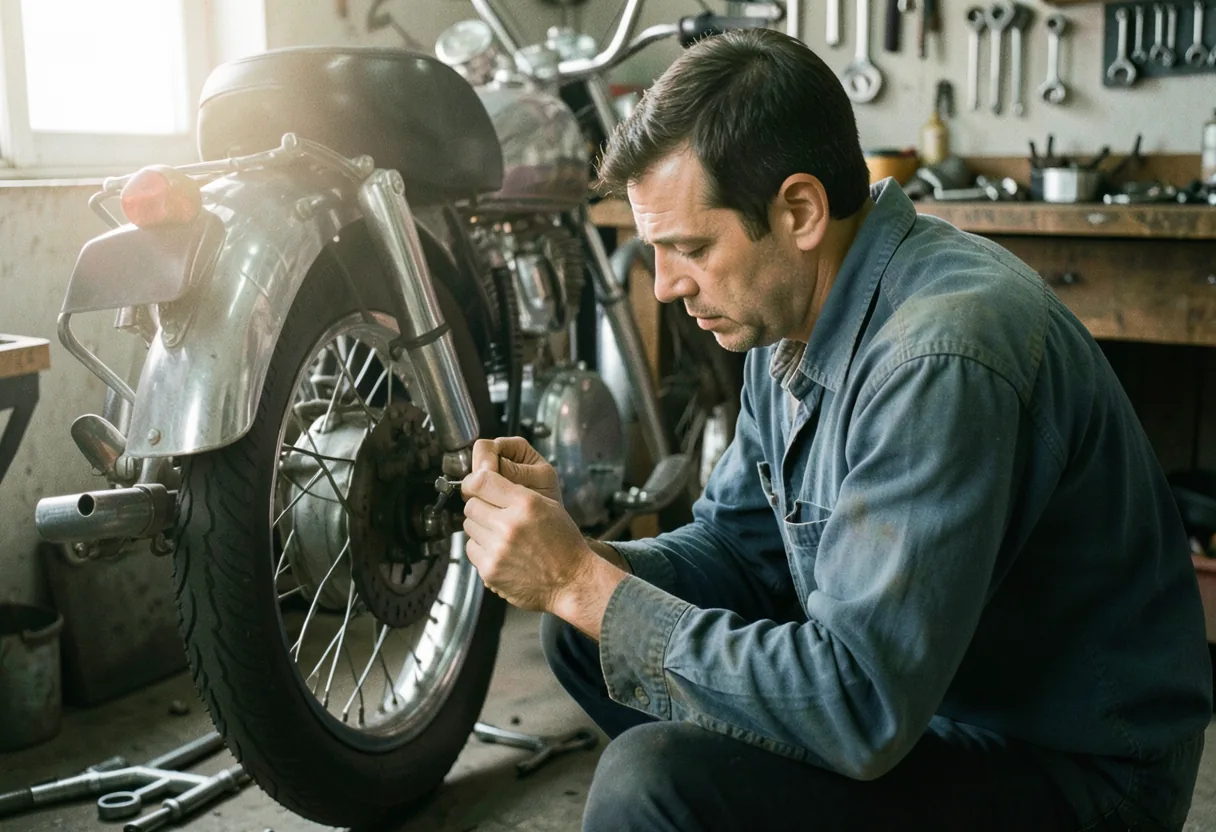
Zen philosophy emphasizes mindfulness, simplicity, and direct experience. In the book, Pirsig suggests that maintaining a motorcycle requires a similar Zen-like focus, paying attention to every detail, staying present in the moment, and finding beauty in the process. For example, cleaning a carburetor isn’t just about functionality; it’s about appreciating the craftsmanship and understanding how each part contributes to the whole.
Pirsig also draws parallels between Zen Buddhism and the act of motorcycle maintenance. Both require patience, discipline, and a willingness to confront imperfection. When the narrator struggles with a stubborn engine, it mirrors the Zen practice of sitting with discomfort until clarity emerges.
03Why is Zen and the Art of Motorcycle Maintenance still relevant today?
The book’s exploration of Quality, an elusive, intangible force that defines excellence, resonates deeply in a world obsessed with efficiency and productivity. Pirsig’s argument that Quality isn’t just a product but a process has influenced fields like design, education, and even software development. For instance, the Agile methodology in software development, which emphasizes iterative improvement and adaptability, echoes Pirsig’s ideas about Quality.
Additionally, the book’s critique of modern education and its emphasis on rote learning over critical thinking feels eerily timely. Pirsig’s call for a more holistic approach to learning, one that values both technical skill and philosophical inquiry, is a message that still challenges readers today.
04How does Pirsig’s personal story influence the novel?
The book is deeply personal, drawing from Pirsig’s own life. After a mental breakdown, he reinvented himself as Phaedrus, the narrator, and used his experiences to explore the nature of sanity and identity. This personal journey adds layers of meaning to the philosophical discussions, making the book as much a memoir as it is a manual or a novel.
Pirsig’s struggle with mental illness also informs his critique of Western philosophy and science. He argues that by separating the knower from the known, modern thought creates a false dichotomy that leads to alienation. The motorcycle, in this sense, becomes a tool for reintegrating the self with the world, a physical manifestation of Pirsig’s philosophical quest.
05How has the book influenced popular culture and other fields?
Zen and the Art of Motorcycle Maintenance has left a profound impact on various aspects of popular culture and professional fields. Its ideas have seeped into areas as diverse as literature, psychology, and even business. For example, the book’s emphasis on Quality has been adopted by design thinkers and user experience (UX) professionals, who use Pirsig’s principles to create products that are not only functional but also emotionally resonant.
In literature, the book has inspired a genre of philosophical novels that blend personal narrative with abstract thought. Authors like David Foster Wallace and Susan Sontag have cited Pirsig’s work as an influence on their own explorations of consciousness and identity. The book’s unique style, a mix of technical manual, memoir, and philosophical treatise, has also paved the way for innovative storytelling techniques.
Moreover, the book’s themes have found resonance in the field of psychology. Pirsig’s exploration of mental illness and his journey toward self-discovery have been studied by psychologists interested in the intersection of philosophy and mental health. The book’s emphasis on mindfulness and presence has also aligned with the growing popularity of mindfulness-based therapies, which focus on living in the moment and accepting imperfections.
Comparison of Pirsig’s Two Modes of Thought
Key Themes in Zen and the Art of Motorcycle Maintenance
Comparisons of Zen and the Art of Motorcycle Maintenance with Other Philosophical Works
06What are some practical lessons from the book?
The book offers several actionable insights, particularly for those interested in personal growth or creative work. Here are a few:
- Embrace the process. Whether you’re fixing a motorcycle or working on a project, focus on the journey, not just the outcome.
- Balance logic and emotion. Don’t ignore the technical details, but also don’t neglect the emotional and subjective aspects of your work.
- Seek Quality in everything. Look for excellence in small, everyday tasks, and strive to create meaning in your actions.
- Question assumptions. Challenge conventional wisdom, especially in fields like education and technology, where rigid thinking can limit progress.
For a deeper dive into the themes and philosophy of Zen and the Art of Motorcycle Maintenance, check out the summary or explore the plot breakdown. If you’re interested in the author’s personal journey, the story of Phaedrus provides fascinating context. To see how the book has stood the test of time, take a look at the review.
Ultimately, the book’s enduring appeal lies in its ability to transform a seemingly mundane activity, motorcycle maintenance, into a profound meditation on life, philosophy, and the search for meaning. Whether you’re a rider, a philosopher, or just someone looking for a fresh perspective, Zen and the Art of Motorcycle Maintenance has something to offer.
The book’s unique blend of philosophy, memoir, and technical manual makes it a standout work in the literary world. Pirsig’s exploration of Quality and his critique of modern education and philosophy continue to resonate with readers, making Zen and the Art of Motorcycle Maintenance a timeless classic. To explore more about Pirsig’s life and work, you can visit the [Robert M. Pirsig Wikipedia page](https://en.wikipedia.org/wiki/Robert_M._Pirsig).
07Frequently asked questions
What is the central theme of 'Zen and the Art of Motorcycle Maintenance'?
The book blends a cross-country motorcycle trip with an exploration of quality and technology. Pirsig introduces his concept of 'Quality,' arguing that true understanding comes from balancing rational thought with intuitive experience, much like maintaining a motorcycle requires both technical skill and Zen-like mindfulness.
Who is Phaedrus in the novel?
Phaedrus is the pseudonym of the narrator's former self, Robert Pirsig, who suffered a mental breakdown in 1961. This alter ego represents Pirsig's past intellectual self, obsessed with understanding the nature of quality, and his struggle with identity and sanity is a central narrative thread.
How does the book critique modern education?
Pirsig criticizes modern education for valuing technical expertise over holistic understanding. He argues that schools teach students to accept information passively, stifling their innate ability to perceive and appreciate quality, a key theme illustrated through the narrator's discussions with his son, Chris.
What is the significance of motorcycle maintenance in the book?
Motorcycle maintenance serves as a metaphor for life. Pirsig uses the mechanical work to illustrate the balance between technical reasoning and artistic intuition. For example, fixing a motorcycle requires both analytical problem-solving and a deep, almost meditative connection to the machine, mirroring the book's philosophical inquiries.