
Best Quotes from Zen and the Art of Motorcycle Maintenance
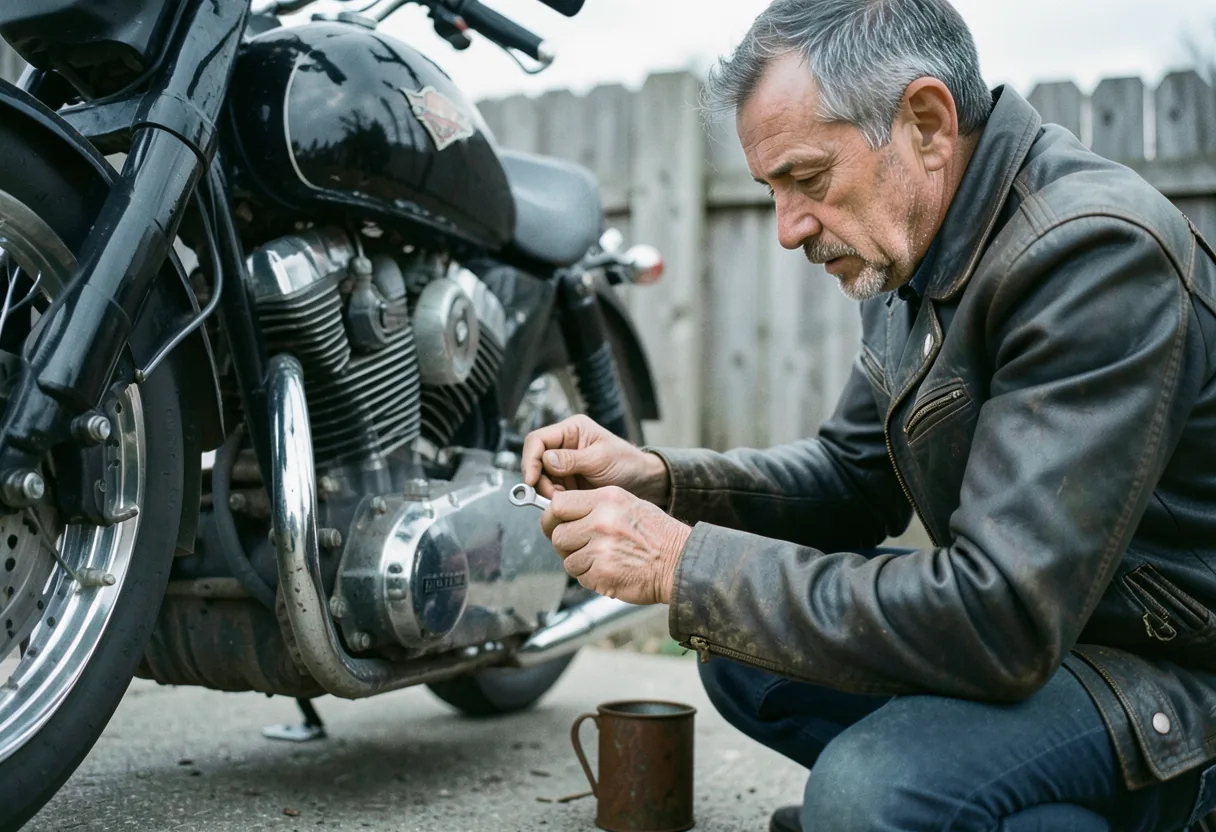
“Zen and the Art of Motorcycle Maintenance” offers profound quotes. Pirsig explores Quality with, “The place to improve the world is first in one’s own heart and head and hands.” He argues, “Static pattern, that’s what the world is. Static pattern, and yet… the world is alive.”
Zen and the art of motorcycle maintenance quotes are profound statements from Robert M. Pirsig’s philosophical novel that blend practical motorcycle care with deeper existential musings.
imagine a mechanic’s wrench is a philosopher’s sword, and every bolt tightened is a knot in the rope of understanding, these quotes are the marks left by that wrench, revealing how the mundane can mirror the divine.
Key facts
- The novel was first published in 1974 after being rejected by 121 publishers.
- Pirsig’s alter ego, Phaedrus, embodies the book’s central philosophical inquiries Phaedrus and the Philosophy in Zen and the Art of Motorcycle Maintenance.
- The book’s themes bridge Western rationalism and Eastern mysticism through the lens of motorcycle maintenance.
- It remains a staple in both motorcycle culture and academic philosophy courses.
01Zen and the Art of Motorcycle Maintenance Quotes by Theme
The book’s brilliance lies in its ability to weave motorcycle maintenance into broader life lessons. Below, I’ve categorized some of the most resonant quotes by theme.
When I first read these quotes, I realized they weren’t just about motorcycles, they were about the way we approach life’s problems. The patience required to rebuild a carburetor mirrors the patience needed to rebuild a life.
Quotes on Quality
- “The place to improve the world is first in one’s own heart and head and hands.”
- “When one person suffers from a delusion, it is insanity. When many people suffer from a delusion it is called religion.”
- “The real purpose of the scientific method is to make sure Nature hasn’t misled you into thinking you know something you actually don’t know.”
- “The Buddha, the Godhead, resides quite as comfortably in the circuits of a digital computer or the gears of a cycle transmission as he does at the top of a mountain or in the petals of a flower.”
Quotes on Maintenance
- “The real motorcycle trip will be found, like the real trip of parenthood or the real trip of marriage or the real trip of life, to be composed of those very quiet times when you ask yourself where you are going or check your lifemap to see where the best route is.”
- “You want to know how to paint a perfect painting? It’s easy. Make yourself perfect and then just paint naturally.”
- “The only zen you find on the tops of mountains is the zen you bring up there.”
- “You look at it for a while, and then you know what to do.”
Quotes on Philosophy
- “The test of the machine is the satisfaction it gives you. There isn’t any other test.”
- “The only Zen you find on the tops of mountains is the Zen you bring there.”
- “Peace of mind produces right values, right values produce right thoughts. Right thoughts produce right actions and right actions produce work which will be a material reflection for others to see of the serenity at the center of it all.”
- “If a man insists a little too emphatically that he is not a poet, he is quite likely a poet.”
Quotes on Life
- “The only Zen you find on the tops of mountains is the Zen you bring there.”
- “Peace of mind produces right values, right values produce right thoughts. Right thoughts produce right actions and right actions produce work which will be a material reflection for others to see of the serenity at the center of it all.”
- “If a man insists a little too emphatically that he is not a poet, he is quite likely a poet.”
- “The real trip of parenthood or the real trip of marriage or the real trip of life, to be composed of those very quiet times when you ask yourself where you are going or check your lifemap to see where the best route is.”

02Comparing Key Philosophical Quotes
To better understand the depth of Pirsig’s work, let’s compare some of the most impactful quotes across different themes.
03Zen and the Art of Motorcycle Maintenance Quotes: How to Use Them
These quotes aren’t just for memorization, they’re for application. Here’s how to use them to enrich your life and work.
- Reflect on the quality of your work. Ask yourself: “Am I producing something of value, or just going through the motions?”
- Embrace the process. Whether you’re fixing a bike or solving a problem at work, remember that “You look at it for a while, and then you know what to do.”
- Seek peace of mind. “Peace of mind produces right values, right values produce right thoughts.” This is a mantra for living intentionally.
- Bring your zen with you. “The only Zen you find on the tops of mountains is the Zen you bring there.” Apply this to your daily challenges, carry your calm with you.
04How to Choose the Right Zen and the Art of Motorcycle Maintenance Quotes
With so many profound quotes to choose from, it can be overwhelming. Here’s a guide to selecting the ones that resonate most with you.
- Identify Your Needs: Are you seeking motivation, philosophical insight, or practical advice? Different quotes serve different purposes.
- Reflect on Your Current Situation: Which quote speaks to the challenges or opportunities you’re facing right now?
- Apply the Quote: Once you’ve chosen a quote, think about how you can apply it to your daily life. Make it a part of your routine.
- Share with Others: Discuss the quotes with friends or family. Sharing insights can deepen your understanding and create meaningful conversations.
One practical takeaway: next time you’re stuck in a problem, ask yourself, “What would Phaedrus do?” The answer might just be simpler than you think.
05Comparing Different Editions of the Book
To fully appreciate the depth of Zen and the Art of Motorcycle Maintenance, it’s helpful to compare different editions of the book. Each edition offers unique insights and perspectives.
06How to Choose the Right Edition
Selecting the right edition of Zen and the Art of Motorcycle Maintenance depends on your reading goals and preferences. Here’s a guide to help you choose.
- Original Edition (1974): If you’re interested in the raw, unedited version of the book, this is the edition for you. It offers a glimpse into Pirsig’s original thoughts and reflections.
- 25th Anniversary Edition (1999): This edition is ideal for readers who want additional context and commentary from the author. It provides valuable insights into Pirsig’s later thoughts and clarifications.
- Modern Paperback Editions: These editions are perfect for students and casual readers. They are affordable and often include study guides and discussion questions, making them an excellent choice for group readings or academic study.
One practical takeaway: if you’re new to the book, start with a modern paperback edition. Once you’ve read it, consider exploring the original or anniversary editions for a deeper understanding.
07Frequently asked questions
What is the central theme of Zen and the Art of Motorcycle Maintenance?
Pirsig's 1974 novel explores the tension between classical and romantic modes of thought. The protagonist's motorcycle journey mirrors his quest to reconcile these perspectives, questioning the nature of quality, technology, and personal growth. The book's title suggests Zen-like mindfulness in mechanical work, but its depth lies in philosophical inquiry.
Why does Pirsig's protagonist use motorcycle maintenance as a metaphor?
Motorcycle repair demands precision and patience, reflecting the book's themes of craftsmanship and attention to detail. Pirsig’s character, an ex-teacher, contrasts the mechanical world’s order with the chaotic, emotional "romantic" view of life. This duality drives the narrative, showing how both perspectives shape understanding.
What is the significance of the term 'Gumption Traps' in the book?
Gumption Traps are obstacles that hinder progress, whether in motorcycle repair or life. Pirsig lists 20 types, from frustration to overconfidence. The term underscores the book’s practical philosophy: recognizing these traps helps maintain both mechanical and mental clarity, aligning with the text’s holistic approach to problem-solving.
How does the book's structure contribute to its philosophical exploration?
The novel alternates between a father-son motorcycle trip and the narrator’s past as a teacher. This split structure mirrors the book’s dualism, practical vs. intellectual, present vs. past. The trip’s linear progression contrasts with the narrator’s nonlinear philosophical digressions, reinforcing the idea that understanding emerges from both movement and reflection.